
Woodward Shoutouts
Archives
"Is Woodward Ok: A Forgotten Town or Hidden Gem?"
SIGN UP FOR OUR NEWSLETTER
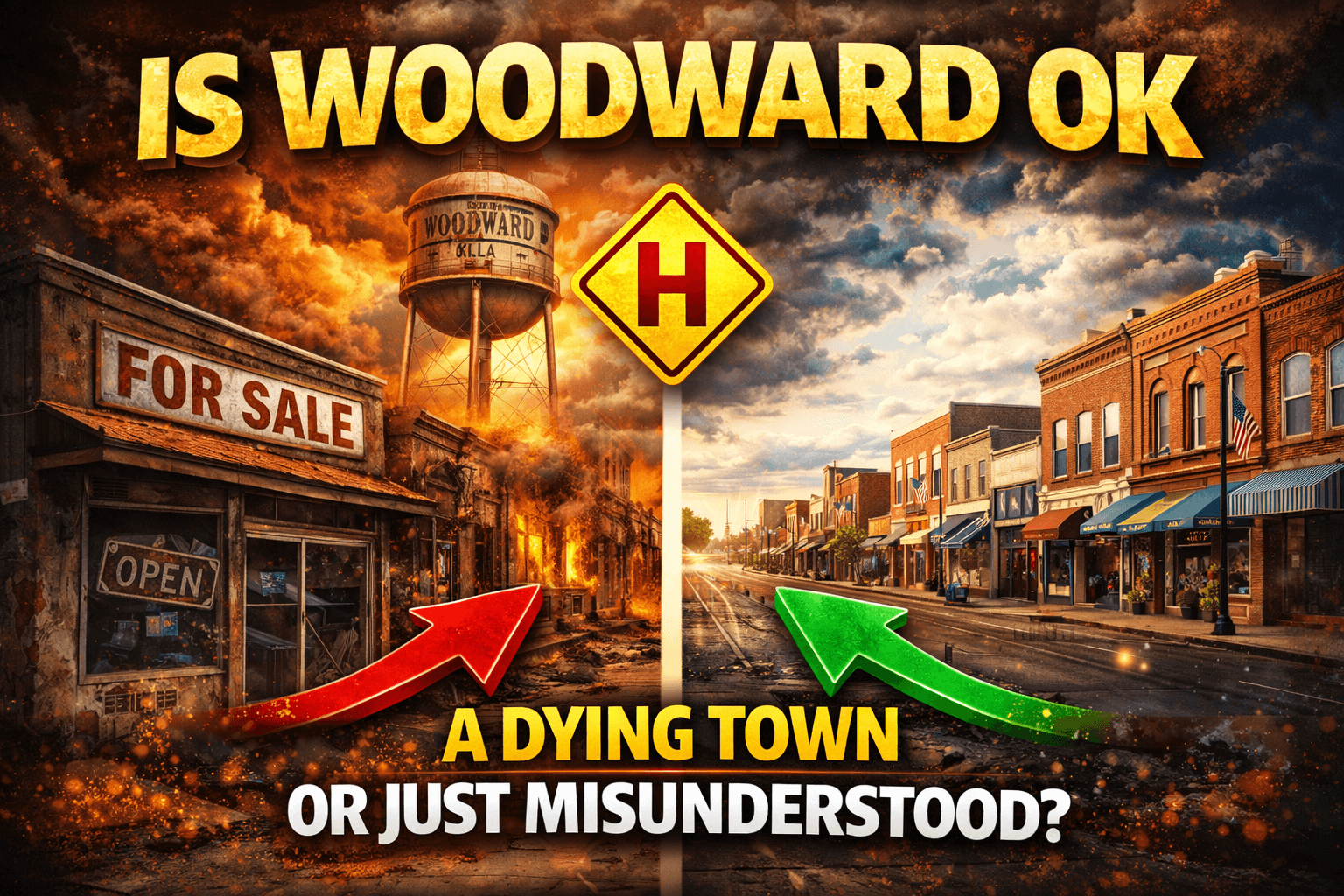
Is Woodward OK a Dying Town or Just Misunderstood? |
Looking beyond population charts and empty storefronts to uncover what’s really happening. |
 |
Small towns across America are often labeled as “dying” the moment population growth slows, a factory closes, or younger residents move away. Woodward, a regional hub in northwest Oklahoma, is no stranger to this narrative. To some outsiders, it looks like another rural town past its prime. To others—especially locals—it’s a community that’s evolving quietly, shaped by forces that aren’t always obvious at first glance.
So which is it? Is Woodward, OK truly in decline, or is it simply misunderstood? The answer lies somewhere in between, and understanding it requires looking at history, economics, demographics, and the everyday realities of life in rural America.
A Brief Look at Woodward’s Roots
Woodward’s identity has always been tied to its role as a crossroads town. Founded in the late 1800s, it became an important stop during westward expansion and later grew as an agricultural and ranching center. Railroads, cattle, and trade defined its early economy, and for decades Woodward served as a key service hub for smaller surrounding communities.
Like many towns built around agriculture and transportation, Woodward thrived when those industries were strong and struggled when they contracted. This boom-and-bust pattern still influences how people perceive the town today. When times are good, Woodward feels resilient and busy; when industries slow down, the “dying town” label tends to resurface.
Population Trends: Decline or Stability?
One of the first metrics people use to judge a town is population. Woodward’s population has fluctuated over the decades, with modest declines followed by periods of stability. Unlike rapidly growing metro areas, it hasn’t seen explosive growth—but that doesn’t automatically mean it’s dying.
In fact, Woodward still functions as a regional center for healthcare, education, and retail in northwest Oklahoma. Many residents from surrounding rural areas commute to Woodward for work, shopping, and services. While younger people do leave for college or bigger cities, a significant number return later in life for affordability, family ties, or job opportunities.
The Local Economy: More Than Meets the Eye
At first glance, Woodward’s economy can seem limited, especially to those used to urban job markets. However, the town’s economic base is more diverse than many assume.
Economic growth in Woodward tends to be steady rather than flashy. That can look like stagnation from the outside, but for residents, it often translates into consistent employment and a lower cost of living.
Quality of Life in Woodward
One area where Woodward is often misunderstood is quality of life. While it lacks the nightlife and amenities of major cities, it offers advantages that many people actively seek:
Nearby natural areas, including Boiling Springs State Park, provide camping, hiking, and fishing opportunities that residents enjoy year-round. Community events, school sports, and local festivals also play a major role in social life.
For people who value space, quiet, and familiarity over constant entertainment, Woodward can be an appealing place to live. Downtown and Development Perceptions
Critics often point to empty storefronts or aging buildings as proof that Woodward is fading. While it’s true that some parts of downtown have struggled, this isn’t unique to Woodward—it’s a challenge faced by small towns nationwide.
At the same time, there have been ongoing efforts to revitalize certain areas, preserve local history, and attract new businesses. These changes tend to happen gradually, which can make progress less visible to casual observers.
Institutions like the Plains Indians and Pioneers Museum help preserve regional heritage while also drawing visitors, reinforcing Woodward’s role as a cultural center in the area.
Why the “Dying Town” Label Sticks
The idea that Woodward is dying often comes from comparing it to fast-growing cities rather than judging it on its own terms. When measured against urban expansion, rural towns almost always look like they’re falling behind.
Other contributing factors include:
These are real challenges—but they don’t tell the whole story. A town doesn’t have to grow rapidly to remain viable or meaningful to its residents.
So, Is Woodward OK Dying or Just Misunderstood?
Woodward isn’t a booming city, but it’s far from a ghost town. It’s a place shaped by cycles, adaptation, and quiet persistence. For those expecting constant growth and change, it may feel stagnant. For those looking for stability, affordability, and community, it can feel like home.
In the end, Woodward, OK is less “dying” and more misunderstood—a town navigating the realities of modern rural America while holding onto the qualities that have sustained it for generations. |